Field Dispatch
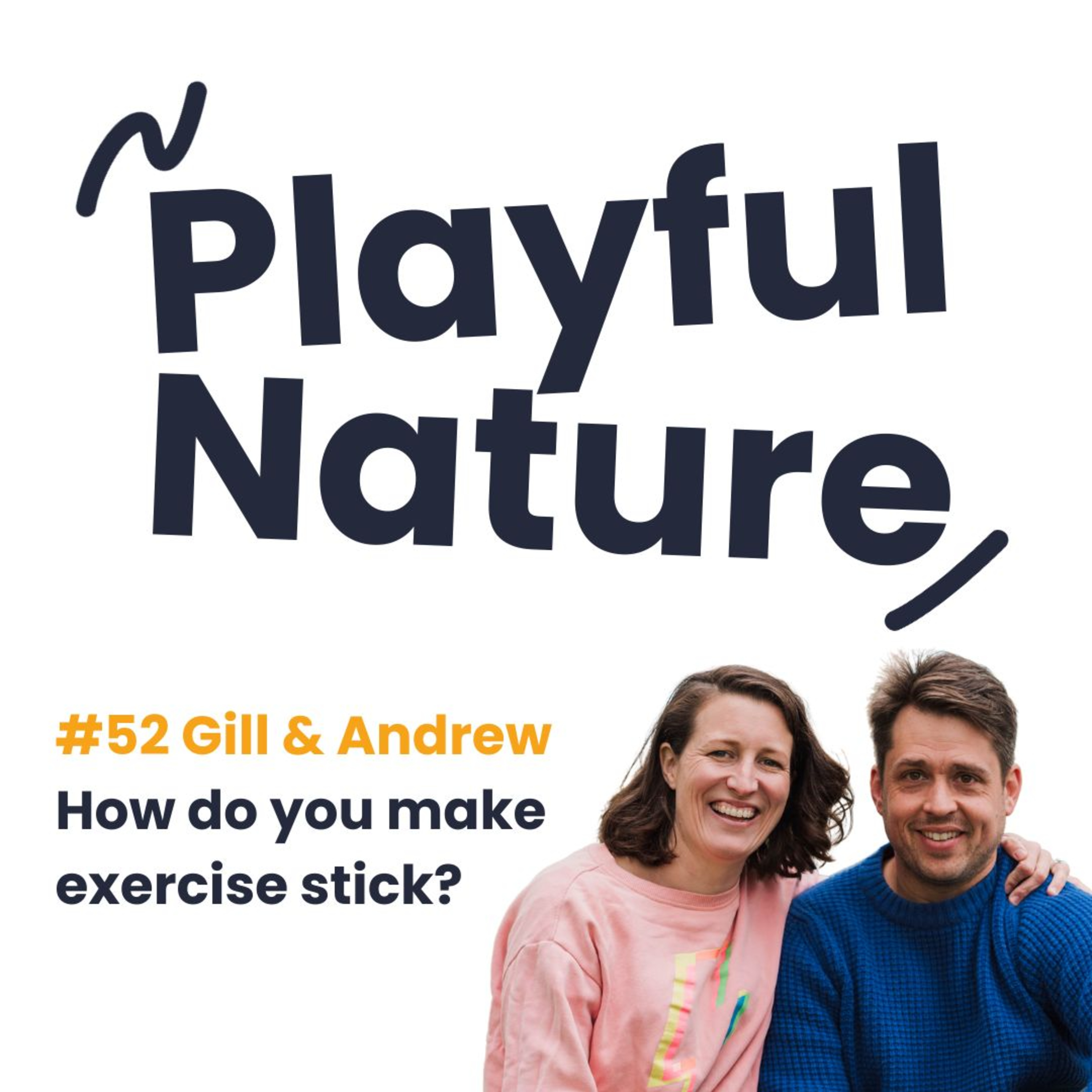
#52. Gill & Andrew. What makes exercise stick?
Notes
How do you actually keep going?
Last week we ran our webinar “What can you do in 20 minutes?” We covered what the research tells us about strength and impact for bone density, what an effective strength programme might actually look like, three movements we’d choose as a starting point, and how to add or take away challenge depending on where you are.
Beforehand, we’d sent out a questionnaire asking what gets in the way. And well over half the answers came back to the same thing: consistency. How on earth do you keep going when life throws in its usual selection of spanners?
We touched on it in the webinar, but there was much more we wanted to say. So this week’s podcast is the more detail.
Andrew and I are VERY different when it comes to exercise. He can happily exercise by himself. I can’t. I need other people, whether that’s in person or online. I need people to show up with, talk to, hear their stories and generally make the whole thing part of something bigger than me and my good intentions.
We talk about why short-term goals can be much more useful than the idea of training for “future you.” Training for your health in 20 years is absolutely valid, but it doesn't necessarily get you out of bed this morning. Something a few months away that feels exciting and just slightly out of reach might.
We also look at the friction between fitness messaging, which so often puts everything on the individual, and what behaviour-change research tells us about how much our environment and social context influence what we actually do.
And we look at a few models you can use to work out what's standing in your way, and what you might change to make exercise an easier choice rather than something you constantly have to make yourself do.
Because motivation will only get any of us so far.
How can you make it NEAR (Normal, Easy, Attractive, Routine)?
Hope it’s helpful.
You also get to meet Sarah the Cockerel, who makes himself known in the background.
 Apple Podcasts
 Castbox
 Castro
 Goodpods
 Moon FM
 Overcast
 Pocket Casts
 Podbean
 Podcast Addict
 Podcast Republic
 Spotify