Field Dispatch
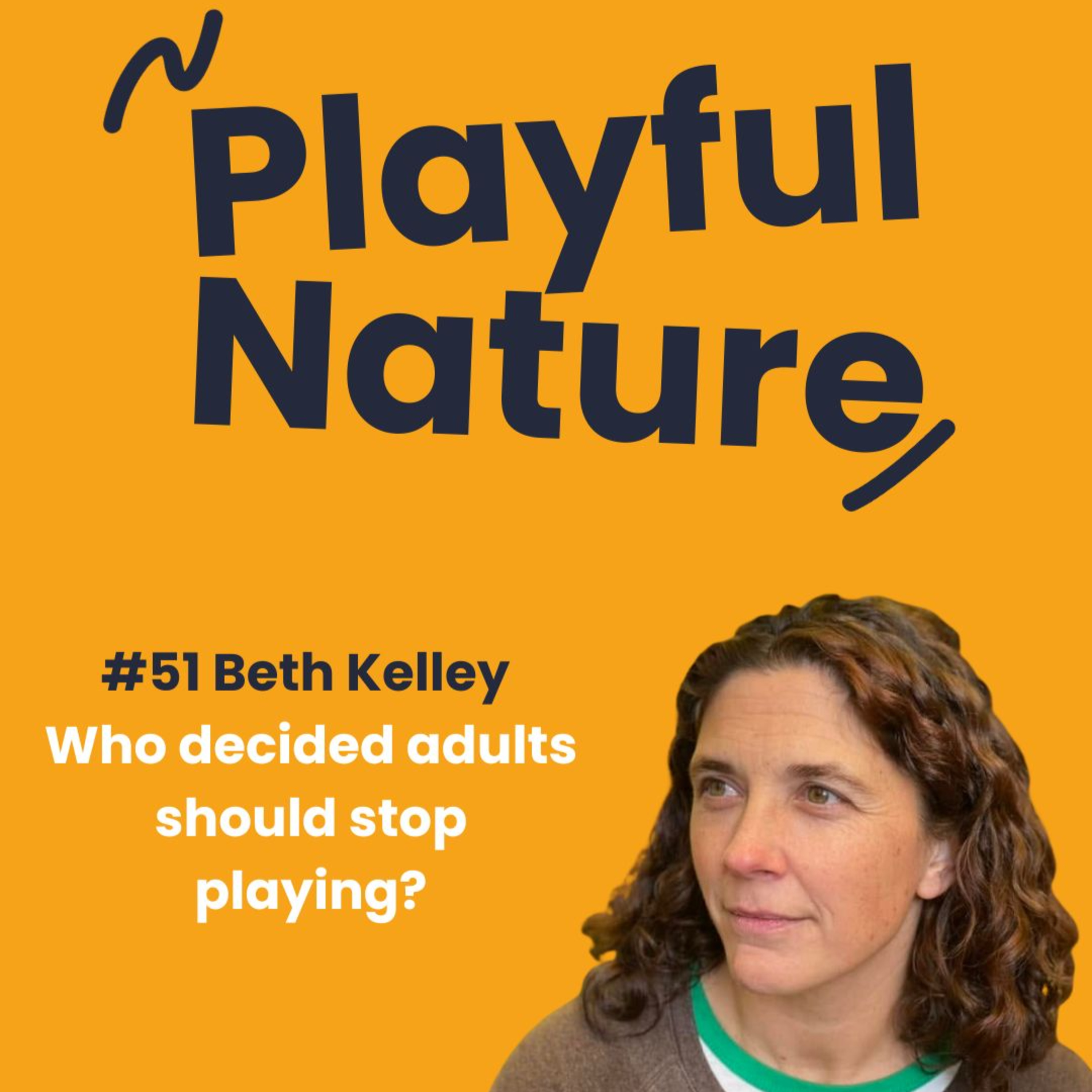
#51 Beth Kelley- Who Decided Adults Should Stop Playing?
Notes
At what age does playing outside start to feel embarrassing?
Beth Kelley is a play researcher and anthropologist whose early research explored parkour as a form of free-form adult play. She has spent nearly 20 years thinking about how and why we play - and what happens when the environments and cultures around us make play increasingly difficult.
We talk about risky play and parenting, why teenagers and adults can feel conspicuous playing in public, and how different cultures have created spaces where adult play is normal. Beth also tells the story of a video of herself playing on some bike racks that went viral - and why the reaction wasn't really about whether she was good or bad at it, but whether an adult should be doing it at all.
That leads us into the fear of looking "cringe", why social media gives us endless examples of experts and spectacular failures but surprisingly little ordinary participation, and Beth's idea that play is a process rather than a performance.
Towards the end, we talk about technology, community, why Beth chose to leave the tech industry, and the small acts of "rogue play" that can make our neighbourhoods feel like places we're allowed to play again.
Conversation outline
02:23 — Beth’s background, anthropology and studying adult play through parkour
09:51 — What is play? Choice, motivation, enjoyment and flow
12:29 — Video games, gamification and the quantified self
18:42 — Risky play, parenting and the pressure to keep children safe
22:08 — Playgrounds, neighbourhoods and the built environment
26:23 — When do teenagers and adults lose permission to play?
29:10 — Adult play in other cultures and throughout history
32:03 — Strength in numbers: making adult play socially acceptable
36:51 — Why you can’t simply tell adults to “go and play”
40:51 — When play becomes another thing to optimise and perform
43:39 — Beth’s viral bike-rack video and the reaction to it
46:28 — Experts, failures and the missing middle online
47:58 — Fear of “cringe”, being messy and getting things wrong
49:33 — Surveillance, smart glasses and what happens when we’re always observable
53:07 — Remote work, physical presence and everyday social contact
57:11 — Third spaces, weak ties and the small interactions we’ve lost
1:01:11 — AI, technology and the loss of human interaction
1:05:11 — Why Beth decided to leave the tech industry
1:07:53 — Analogue life, community and opting out of optimisation
1:13:02 — Building physical spaces for play and community
1:14:57 — “Rogue play”: small ways to invite play into our neighbourhoods
Beth's writing: https://substack.com/@bethkelley
Beth on Instagram: https://www.instagram.com/mbethkelley/
Beth's website: https://bethkelleyportfolio.com/
Beth's research, Moving Like a Kid Again: An Analysis of Parkour as Free-Form Adult Play: https://cedar.wwu.edu/wwuet/165
 Apple Podcasts
 Castbox
 Castro
 Goodpods
 Moon FM
 Overcast
 Pocket Casts
 Podbean
 Podcast Addict
 Podcast Republic
 Spotify