Field Dispatch
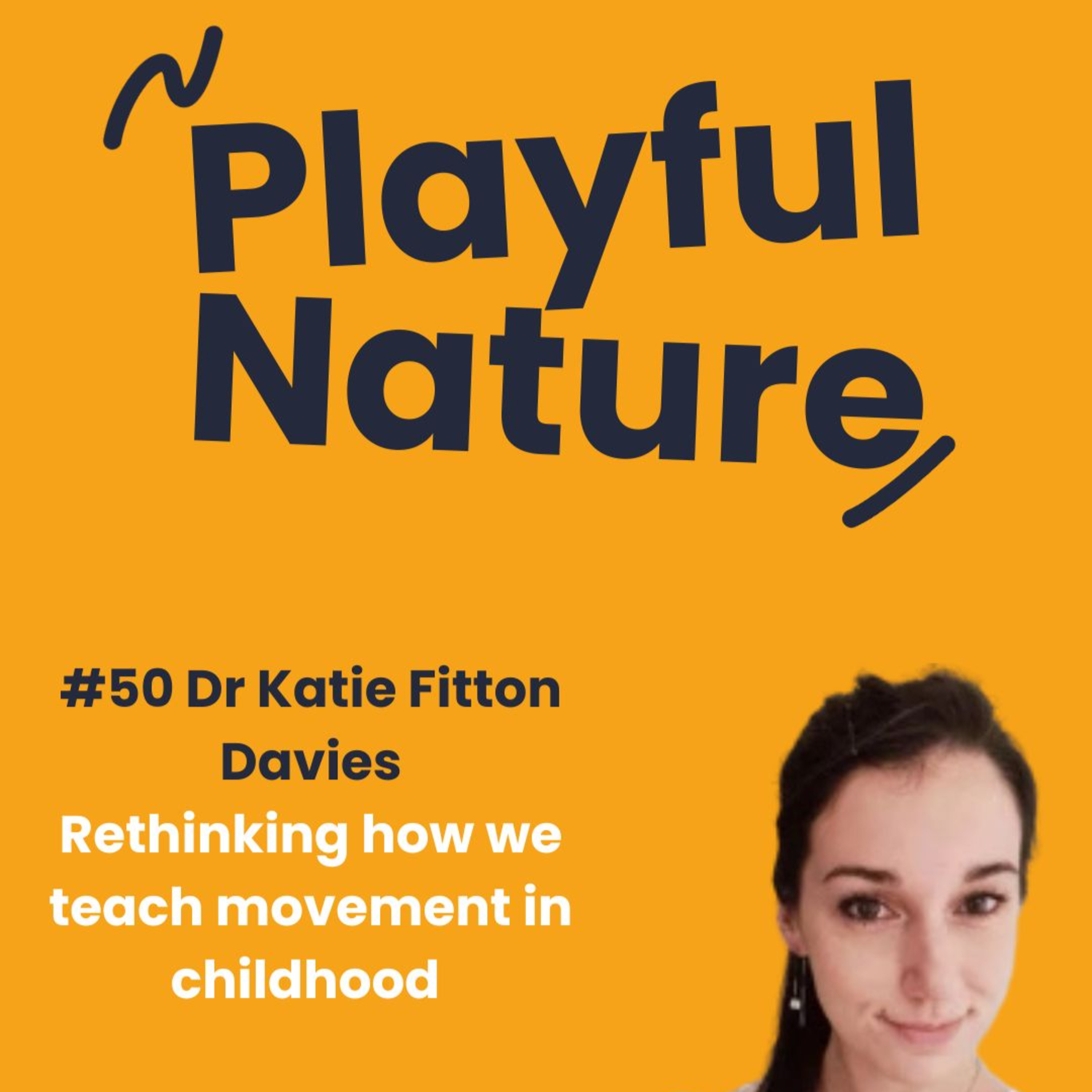
#50 Dr Katie Fitton Davies. Rethinking how we teach movement in childhood
Notes
Dr Katie Fitton Davies joins Andrew Telfer to explore how nonlinear pedagogy and gamification can make movement more meaningful for children and adults.
Katie explains how coaches, teachers and parents can create playful environments that encourage people to experiment, adapt and discover their own movement solutions - instead of prescribing a single “correct” technique.
Together they explore:
The principles of nonlinear pedagogy
Representative learning design and perception-action coupling
Using constraints to encourage exploration and adaptability
The STEP framework: space, time, equipment and people
Using questions and analogies to create an external focus
Gamification beyond points and badges
Intrinsic motivation, autonomy and lifelong physical activity
Creating psychologically safe environments for movement
Katie also shares a space-themed, parent-led intervention in which children completed movement missions and earned stars. The programme improved both stability and cognitive skills.
When people have opportunities to play, explore and solve problems, they can build confidence, physical literacy and a lasting relationship with movement.
Dr Katie Fitton Davies is a Senior Lecturer in Physical Education and Movement Sciences at Liverpool John Moores University. Her research explores physical education, nonlinear pedagogy, motivation, motor competence and physical activity, with a particular focus on creating meaningful movement experiences for children. Before joining LJMU, Katie worked as a Research Fellow at Coventry University, developing school-based physical activity and exercise interventions.



 Apple Podcasts
 Castbox
 Castro
 Goodpods
 Moon FM
 Overcast
 Pocket Casts
 Podbean
 Podcast Addict
 Podcast Republic
 Spotify